How to Choose the Right Strong Base Anion Resin for Your Needs?
Choosing the right strong base anion resin can significantly impact various applications, from water treatment to chemical processing. According to Dr. Emily Carter, a leading expert in the field, "Selecting the right resin is crucial for optimal performance." This emphasizes the importance of careful consideration in the selection process.
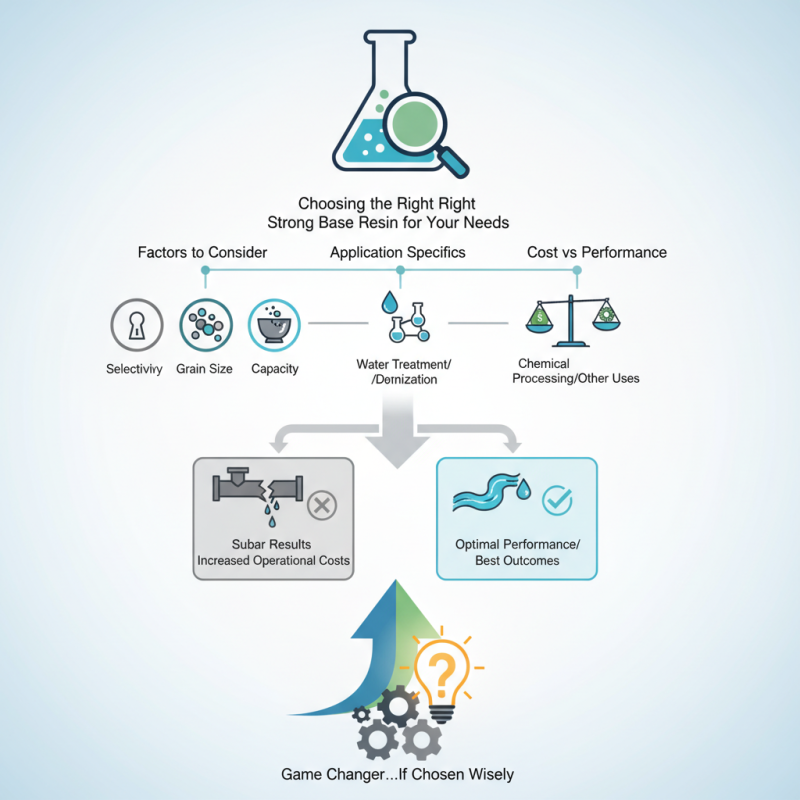
When evaluating strong base anion resins, one must consider specific needs. Factors include the resin’s selectivity, grain size, and capacity. Each application may require different properties. For example, a resin designed for deionization might not be suitable for other purposes. Users often overlook these details, leading to subpar results.
It's also essential to reflect on the balance between cost and performance. Some may choose cheaper resins without understanding long-term consequences. Misjudgments can lead to increased operational costs. A careful analysis of options ensures the best outcomes. Strong base anion resins can be a game changer, but only if the right one is chosen.
Understanding Strong Base Anion Resins and Their Applications
Strong base anion resins are essential in various industrial applications. They excel at removing charged compounds from liquids. This includes water purification and waste treatment. Reports indicate that their demand is rising. In 2022, the global market for ion exchange resins reached USD 1.6 billion. This growth highlights their significance in industries like pharmaceuticals and energy.
Choosing the right resin can be complex. Factors such as resin structure, operating conditions, and target contaminants must be considered. Not all strong base anion resins are created equal. Some work better in extreme conditions, while others are optimized for specific ions. For instance, certain resins efficiently remove organic compounds while struggling with inorganic ones. This inconsistency can lead to subpar results.
Research shows that inappropriate resin choices can increase operational costs. Up to 30% of water treatment plants may face inefficiencies due to resin selection mistakes. Evaluating your specific needs is crucial. Engaging with data and performance metrics can aid in making informed choices. The right resin can significantly improve efficiency and reduce costs. Understanding these resins allows for better application in various sectors.
Evaluating Key Factors in Choosing Strong Base Anion Resins
When choosing a strong base anion resin, several key factors come into play. You need to consider the specific application. Different industries have unique requirements. For example, water treatment and pharmaceuticals require distinct resin characteristics. Understanding your needs is crucial.
Tip: Always assess the compatibility of the resin with your feed water. This will help ensure efficiency. Think about ion exchange capacity too. Higher capacity resins can handle larger contaminant loads. However, they may cost more upfront, requiring a deeper evaluation of your budget.
Another factor is the temperature range. Some resins perform poorly at high temperatures. Check manufacturer specifications carefully. The pH compatibility of the resin is also critical. Resins might degrade in acidic or basic conditions. Choose wisely to avoid unnecessary replacement costs.
Tip: Consider the lifecycle of the resin. Some might need frequent replacements, leading to higher maintenance. Balance the initial investment with long-term performance. Regularly review the resin's effectiveness. If you notice issues, adjust your choices accordingly.
Comparing Different Types of Strong Base Anion Resins
When comparing different types of strong base anion resins, understanding their unique characteristics is essential. This type of resin generally falls into two categories: Type I and Type II. Type I resins, usually made from polystyrene, exhibit a higher capacity for organic matter removal. They can handle a wide range of pH levels. In contrast, Type II resins are typically better for high pH applications, providing superior stability.
Industry reports indicate that more than 70% of water treatment facilities prefer Type I resins due to their high efficiency in deionization. Yet, Type II resins often outperform in specific chemical environments. If the choice fails to fit the intended application, it can lead to costly downtimes. The wrong resin may not only compromise the deionization process but can also complicate maintenance protocols.
Furthermore, the ion-exchange capacity is crucial in selecting resin types. Studies show how Type I resins maintain an exchange capacity of about 1.5 meq/mL, which is significant for drinking water applications. Yet, their performance can decline under specific conditions. Ordering based on assumptions rather than empirical data can lead to issues. Always consider the specific requirements before finalizing a choice.
Assessing Cost-Effectiveness and Longevity of Anion Resins
When selecting a strong base anion resin, cost-effectiveness and longevity play significant roles. A recent industry report indicates that the total cost of ownership can vary significantly among different resin types. For instance, strong base anion resins may range from $30 to $250 per cubic foot. However, higher initial costs do not always guarantee better longevity.
Longevity is vital for sustainable operations. Resins can maintain performance for 5 to 15 years, dependent on factors like water quality and operating conditions. Frequent replacements can escalate costs, making longevity a critical consideration. Contamination reduces resin lifespan. Regular monitoring of influent water quality is, therefore, necessary.
Material that withstands degradation tends to be more expensive upfront. However, this choice can lead to lower maintenance costs. An analysis of resin usage in various applications shows that longevity is often worth the investment. Additionally, many facilities do not fully calculate these long-term savings. Miscalculating resin life can lead to budget overruns and operational downtime, illustrating the need for careful evaluation before selection.
Cost-Effectiveness and Longevity of Anion Resins
Tips for Sourcing and Testing Strong Base Anion Resins
When sourcing strong base anion resins, focus on their specific properties. Different applications require different ion exchange capabilities. Understand the type of contaminants you'll be targeting. Whether it's organic molecules or inorganic ions, the right resin can make a significant difference.
Testing these resins is crucial. A simple batch test can show their efficiency. Ensure you have a clear understanding of the water quality parameters before testing begins. It's often easy to overlook the finer details. Common testing methods include break-through curves. They provide insights into resin capacity and lifespan.
Don't hesitate to connect with suppliers for additional information. Ask questions about their sourcing practices. There can be hidden factors that affect the quality of resins. Each batch may vary. Remember to keep detailed notes during your testing phase. Documenting results helps in making informed decisions. Revisiting your process can lead to improvements and discoveries.
How to Choose the Right Strong Base Anion Resin for Your Needs?
| Resin Type | Functional Group | Application | Recommended pH Range | Regeneration Method |
| Type I | Quaternary Amine | Water Treatment | 1-14 | Sodium Hydroxide |
| Type II | Tertiary Amine | Ion Exchange | 6-13 | Sodium Chloride |
| Type III | Polyfunctional Amine | Wastewater Treatment | 5-12 | Ammonium Hydroxide |
| Type IV | Amino Group | Beverage Processing | 4-10 | Sodium Carbonate |