In today's competitive market, businesses seek innovative strategies for growth. Private Label (OEM) products have emerged as a powerful approach for entrepreneurs. According to a recent report from Statista, the global private label market is expected to reach over $200 billion by 2024. This growth reflects a shift in consumer preferences toward quality and price sensitivity.
Choosing the right Private Label (OEM) products can significantly impact a company’s success. Retailers often report higher profit margins with private labels compared to national brands. A study by Nielsen indicates that private label products now account for nearly 18% of all retail sales. However, the challenge lies in selecting products that align with customer expectations while maintaining quality.
Businesses must navigate various factors when entering this market. Research shows that 59% of consumers consider packaging and branding crucial in their purchase decisions. While the potential for profit is high, the risk of misalignment with market trends can lead to financial setbacks. Entrepreneurs need a thorough understanding of their target audience and industry dynamics, as these elements are vital for leveraging Private Label (OEM) offerings effectively.

Private label and OEM products present unique opportunities for businesses aiming for growth.
Private label products are created by manufacturers and marketed under a retailer's brand.
This allows companies to have more control over pricing and marketing. It's crucial to ensure that the quality meets customer expectations.
Customers often associate the brand name with the product's reliability.
On the other hand, OEM (Original Equipment Manufacturer) products are made by one company and sold under another company's brand.
Businesses can leverage OEM products to expand their offerings without heavy investment in manufacturing.
However, transparency in sourcing is essential. Poorly chosen products can damage brand reputation.
Care must be taken to assess the manufacturer's reputation and product standards.
Understanding these models can be complex. While some companies benefit greatly, others face challenges.
Some struggle with communication and timelines. Clear contracts and expectations are necessary to avoid misunderstandings.
Each business must take time to evaluate its needs and goals before diving in.
Exploring the nuances of private labels and OEM products is vital for long-term success.

Private labeling offers unique benefits for business growth. It allows companies to create brand identity effortlessly. According to a study by Grand View Research, the global private label market is expected to reach $200 billion by 2025. This growth indicates rising consumer trust in private label products, which can lead to increased sales for businesses.
One of the key advantages is cost-effective production. Companies can benefit from OEM partnerships without the burden of developing products from scratch. This saves time and resources. A survey by the Private Label Manufacturers Association reported that 68% of consumers are open to purchasing private label products. Such openness underscores the demand for high-quality, affordable options.
However, businesses should carefully consider product quality and branding. A poorly executed product can harm reputation. It's essential to invest in research and development. Additionally, maintaining a balance between price and quality is crucial. Brands must regularly assess consumer feedback. This reflection will help refine products and strategies. Adapting to market changes is vital for sustained growth.
| Product Category | Description | Benefits | Market Demand |
|---|---|---|---|
| Skin Care Products | Includes moisturizers, serums, and sunscreens. | High-profit margins and brand recognition. | Growing demand in beauty and wellness sectors. |
| Health Supplements | Vitamins, minerals, and herbal products. | Increased consumer health awareness. | Stable market growth with high consumer interest. |
| Home Decor Items | Cushions, wall art, and decorative accessories. | Unique branding opportunities and customization. | Consistent demand in the home improvement sector. |
| Kitchen Gadgets | Tools and utensils for cooking and food preparation. | Cost-effective production and high turnover. | Rising interest in cooking and baking hobbies. |
| Fitness Apparel | Leggings, tops, and accessories for workouts. | Aligns with health trends and brand loyalty. | Expanding market with growing fitness culture. |
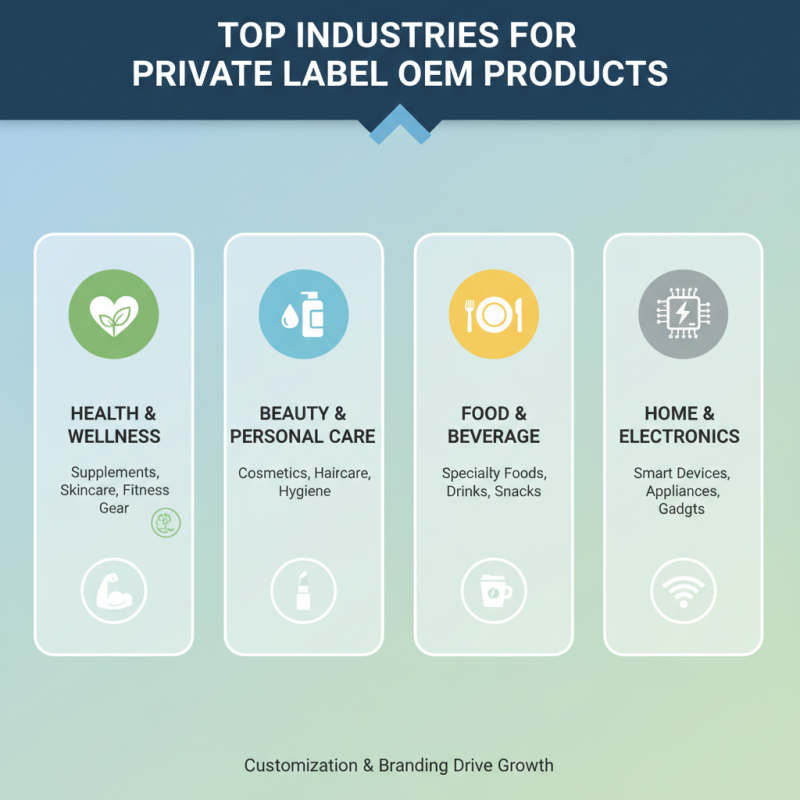
The surge in demand for private label OEM products is notable across various industries. Companies are increasingly choosing to build their brands through unique, customized offerings. Among the top sectors, the health and wellness industry stands out. Consumers are more health-conscious than ever, seeking products that reflect their lifestyle choices.
Another thriving domain is beauty and personal care. This market allows businesses to create signature products that cater to niche audiences. Custom formulations and packaging attract customers looking for unique experiences. Additionally, the home goods sector benefits from private label strategies. Brands can capitalize on trends in decor, kitchenware, or consumer gadgets.
Tip: Always conduct market research before entering new sectors. Understand customer needs and preferences.
The fashion industry also welcomes private label products. It offers flexibility in styles and pricing, allowing brands to respond quickly to trends. However, not every attempt will succeed. Some designs may miss the mark, leading to unsold stock.
Tip: Test your products with a small audience first. Use feedback for improvement.
Building a reliable private label can be challenging. Companies must ensure quality and maintain consistent branding. It's essential to find trustworthy suppliers. Failing to do so can damage a brand's reputation, emphasizing the need for careful planning and execution.
Selecting private label products is crucial for business growth. A few key factors can guide this decision-making process. First, consider the market demand. Research trends and customer preferences to identify what products are currently in demand. Use tools like online surveys or social media polls to gather insights. Understanding your target audience is vital.
Next, evaluate the quality and reliability of potential suppliers. Look for manufacturers with a proven track record. Request samples to assess product quality. Discuss manufacturing processes and quality control measures. A partnership with a reputable manufacturer can enhance your brand's reputation.
Pricing is also important. Ensure that the cost of production allows for healthy profit margins. Compare prices among different suppliers, but do not compromise on quality for lower costs. Think about the long-term success of your product. Balance between affordability and quality ensures a sustainable growth path. Reflect on these factors regularly, as market dynamics can change rapidly. Every decision you make should align with your brand values.
Private label branding offers immense potential for businesses aiming to thrive in competitive markets. Strategies for effective private label branding hinge on understanding target demographics and market trends. Research shows that nearly 70% of consumers prefer buying private label products due to their perceived value and quality. Therefore, brands should focus on offering high-quality products that meet consumer demands.
Investing in market research is essential. Businesses should analyze consumer preferences and identify successful product categories. Data from industry reports indicate that private label goods in the food and beverage sector grew by over 15% in recent years. This growth suggests a shift in consumer trust towards private labels. Creating authentic brand narratives that resonate with consumers can elevate a product's market performance.
However, challenges exist. Many businesses struggle to differentiate their products in a crowded marketplace. Establishing unique packaging, reliable supply chains, and consistent quality is crucial. Consumer loyalty is fragile; any inconsistency can lead to lost sales. Embracing customer feedback and iterating on products over time is vital for lasting success in private label branding. Reflecting and adapting to changing market demands is key to fostering growth in this segment.